The Art of UX Storytelling In today’s digital age, exceptional user experiences (UX) extend beyond functional design and intuitive navigation. They’re about forming emotional connections — creating a sense of understanding and relatability between the product and the user. This is where the art of UX storytelling shines.
The Art of UX Storytelling UX storytelling transforms raw data, user personas, and research into engaging narratives that mirror the users’ experiences, needs, and goals. It’s not just about telling a story; it’s about crafting a journey where users are the protagonists, and the product acts as the guide toward resolving their challenges.
Mastering the Art of UX Storytelling: Resonating with Users Unleashing the Art of UX Storytelling: Resonating with Users Transforming UX Design Through Storytelling: Resonating with Users Crafting the Perfect UX Story: Resonating with Users Elevating UX Storytelling: Resonating with Users Empowering User Connections: The Art of UX Storytelling
Create Digital Products That Truly Resonate Through UX Storytelling
The Art of UX Storytelling Have you ever encountered a product or service that felt as though it understood you completely—your goals, your values, and even your lifestyle? That feeling is nothing short of empowering.
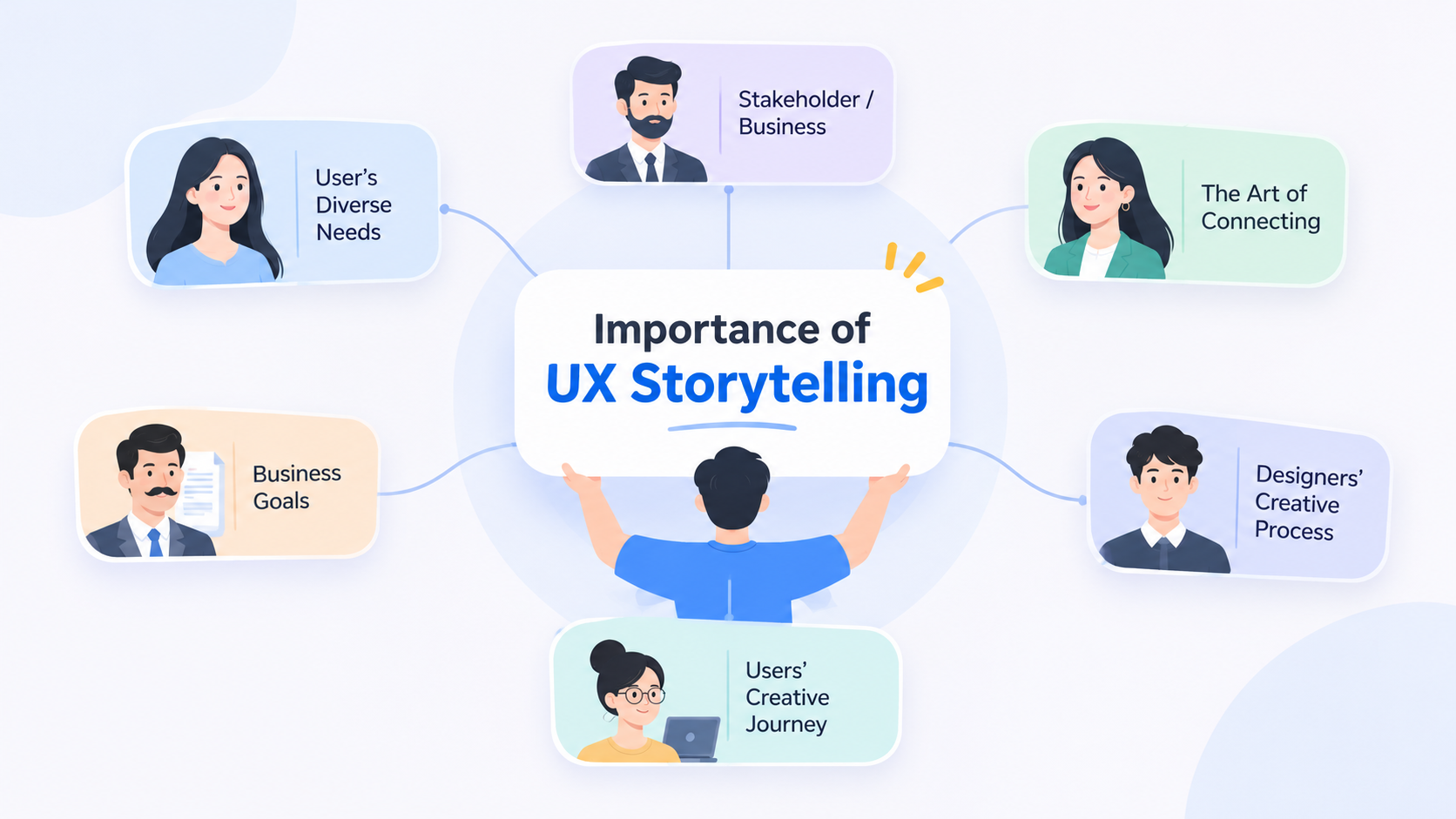
Yet, crafting experiences that connect with the diverse and intricate needs of users isn’t a simple task. People bring unique perspectives shaped by personal journeys, cultural trends, and even historical events. Unfortunately, many organizations overlook these nuances and design based on broad assumptions rather than genuine understanding.
So how do you design meaningful experiences that align with users’ authentic stories? The answer lies in UX storytelling, a powerful combination of narrative thinking and user-centered design principles.
This guide will take you through:
Why UX storytelling is crucial.
How it bridges the gap between product creators and users.
Actionable frameworks and methods to make your storytelling effective.
The undeniable benefits for both your users and your business.
What Is Storytelling in UX Design?
The Art of UX Storytelling Storytelling in UX design is about weaving user narratives into the design process. By looking at a product through the lens of users’ motivations, frustrations, and needs, designers can humanize interactions and create emotionally resonant experiences.
Imagine each user as the protagonist in their story. Like every great character, they have obstacles to overcome and goals to achieve. UX storytelling helps you chart their journey and craft solutions that address their pain points.
📌 Example:
In fintech, users often feel overwhelmed by interfaces packed with tables and data. By building a story around a user struggling with financial complexity, designers can create simpler flows, use progressive disclosure, and add contextual microcopy to alleviate stress.
Benefits of Storytelling for User Experience
Storytelling adds depth and relatability to the design process. Here’s why it matters:
1️⃣ Informed Decision-Making:
Storytelling keeps users front and center. Whether you’re brainstorming features, iterating designs, or analyzing feedback, stories ground teams in real user experiences and reduce the risk of technical tunnel vision.
2️⃣ Data with a Human Touch:
Raw user data—be it survey results or analytics—can feel abstract. Storytelling transforms numbers into relatable narratives, providing clarity and context to user behaviors and motivations.
3️⃣ Exploring Edge Cases:
While typical personas focus on mainstream users, storytelling uncovers niche scenarios. This ensures your design accounts for diverse users, from beginners to power users.
4️⃣ Building Loyalty and Trust:
Great stories release oxytocin—the “bonding hormone.” Products designed with empathy create meaningful connections, ensuring users feel seen, heard, and appreciated.
5️⃣ Enhanced Team Collaboration:
Storytelling fosters alignment across teams. Sharing user stories helps developers, designers, and stakeholders rally around a common vision, bridging technical ambitions with real-world needs.
How to Build a Great Story in UX Design
Every compelling story has three core elements:
The Starting Point (A):
Understand your users’ current reality—what are their challenges, pain points, and habits?The Desired Outcome (B):
Envision how your product will change their lives. What emotional, behavioral, or practical transformation will they experience?The Bridge (Story):
Your story connects the starting point to the desired outcome, highlighting the user’s journey through your product.
Frameworks for UX Storytelling
1. Dan Harmon’s Story Circle Framework
The Art of UX Storytelling Dan Harmon, creator of Rick and Morty, developed an eight-step structure that maps perfectly to UX design:
You: Who is your user?
Need: What drives their actions?
Go: How do they find your product?
Search: What steps do they take within the product?
Find: What solutions do they discover?
Take: How do they act on those solutions?
Return: What happens after completing their interaction?
Change: How has the user evolved, and how do you ensure long-term satisfaction?
📌 Example Story for a Food App:
A busy professional (You) struggles with finding time to cook (Need). They hear about a meal delivery app (Go) and explore its user-friendly interface (Search). They find a suitable healthy option (Find), place an order (Take), and track it in real time (Return). By the end, they realize healthy eating can be both affordable and convenient (Change).
2. Working Backwards Method (Amazon’s Framework)
This framework flips traditional product development:
Envision the end-user experience.
Write a press release articulating its value.
Test the concept with users and refine based on their feedback.
3. Storyboarding Workshops
Encourage team members to sketch user flows in panels.
Frame a key interaction, e.g., onboarding.
Identify gaps or challenges in the journey.
Refine as a team to align the narrative with user goals.
UX Storytelling in Action: The Qubstudio Approach
The Art of UX Storytelling At Qubstudio, our design process revolves around UX storytelling. We’ve worked across industries like healthcare, EdTech, and logistics to craft experiences that align with real-world user needs.
Whether it’s prototyping with personas, hosting storyboarding workshops, or employing frameworks like Dan Harmon’s Story Circle, our goal is to ensure every product tells a meaningful story that resonates with its audience.
Conclusion: Bridging Gaps Through Storytelling
UX storytelling is not just about making a website or app look good. It’s about understanding what users need, what they struggle with, and how design can make their experience easier and more enjoyable.
Have an idea for a digital product or want to improve your existing website? Explore Morhover Design Studio and let's create something your users will love.